
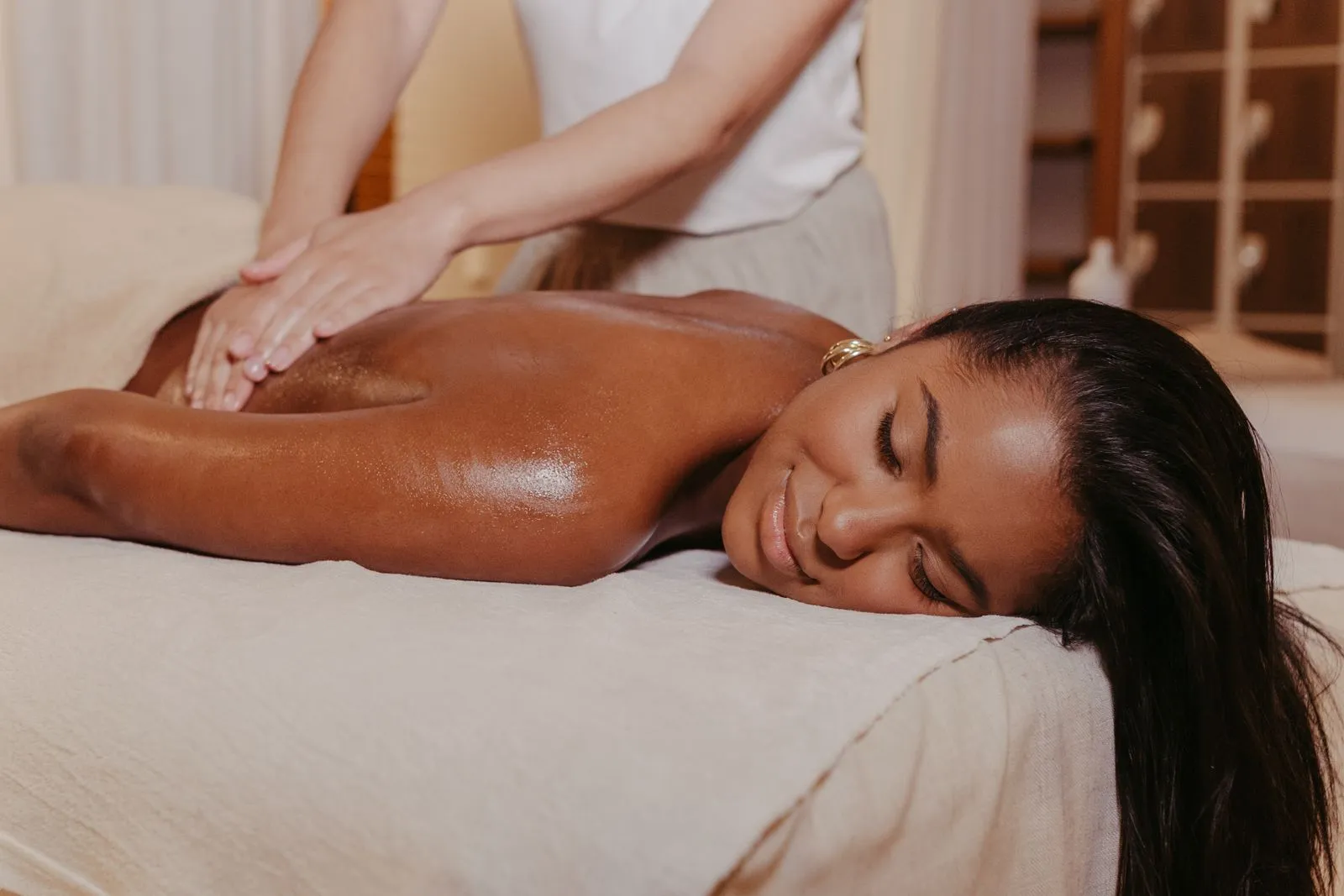
Your first massage can feel unfamiliar, but you do not need special knowledge or equipment to prepare. A little planning helps you arrive without rushing and gives your therapist a clearer picture of what would make the session comfortable and useful. Think about what you hope to get from the visit, any areas you want addressed or avoided, and the pressure that feels right to you. You can ask questions or change your preferences during the session.
What to Bring
Wear comfortable clothes that are easy to change out of, and bring only what you need. Your therapist will explain how to get ready and provide appropriate covering and privacy. You can undress to whatever level feels comfortable; you remain covered except for the area being worked on. If you have a relevant medical note, medication list, or care instructions from a clinician, bring those details or be ready to describe them.
Before you book or arrive, mention any allergies or sensitivities, especially to fragrances, oils, or lotions. If aromatherapy is part of the service, ask which products may be used and request an unscented option if you prefer. You do not need to bring your own oil unless the therapist asks you to. A bottle of water for afterward can be useful, but follow any specific guidance your provider gives.
Plan Your Arrival
Check the address, parking options, and appointment instructions ahead of time. Aim to arrive about 10 to 15 minutes early if you need to complete paperwork or settle in; follow the provider’s directions if they give a different arrival time. Arriving right at the appointment time can make the start feel rushed, while arriving much earlier may not be helpful if the space is not ready.
If you are running late, call or message as soon as you can. The appointment may need to end at its scheduled time, so lateness can shorten the session. Try to avoid a heavy meal immediately beforehand, and give yourself a few quiet minutes to use the restroom and shift out of work or travel mode. Tell the therapist if you feel unwell or have a new injury before treatment begins.
Share Your Goals Clearly
You do not need to know massage terminology. Describe what you want in everyday language: perhaps you hope to relax, ease general muscle tension, or focus on a particular area. Point out where you feel discomfort and explain when it started, what makes it better or worse, and whether you want the area worked on or avoided. Also mention relevant health conditions, recent procedures, pregnancy, or anything that could affect your comfort.
A brief conversation before the session helps your therapist tailor the work, but your goals can change. You can ask what to expect, request a pause, or let the therapist know if a position is uncomfortable. Share only what is relevant to your care, and ask if you are unsure why a question matters. Clear communication helps the session stay within your comfort and boundaries.
Set Pressure Preferences
Pressure is personal, so there is no correct level to choose. You might prefer light, moderate, or firm touch, and different areas may need different pressure. Say what feels comfortable before the massage starts, then give feedback as the therapist works. Useful phrases include “a little lighter,” “that pressure works,” or “please avoid that spot.” You do not have to wait until the end to speak up.
Massage should not feel like something you need to endure. Sharp, burning, tingling, or numb sensations are reasons to tell the therapist to stop or adjust. If you are unsure how a technique will feel, ask for a gradual approach. You can also change your mind about pressure, areas, or products during the appointment. Your comfort and consent remain important throughout the session.
For a smoother first visit, arrive with enough time to settle in, bring any information relevant to your care, and describe your goals and pressure preferences in plain language. You can ask questions and speak up at any point. If you are ready to plan a session, contact Stillpoint Aromatherapy to ask about the appointment process and available options.